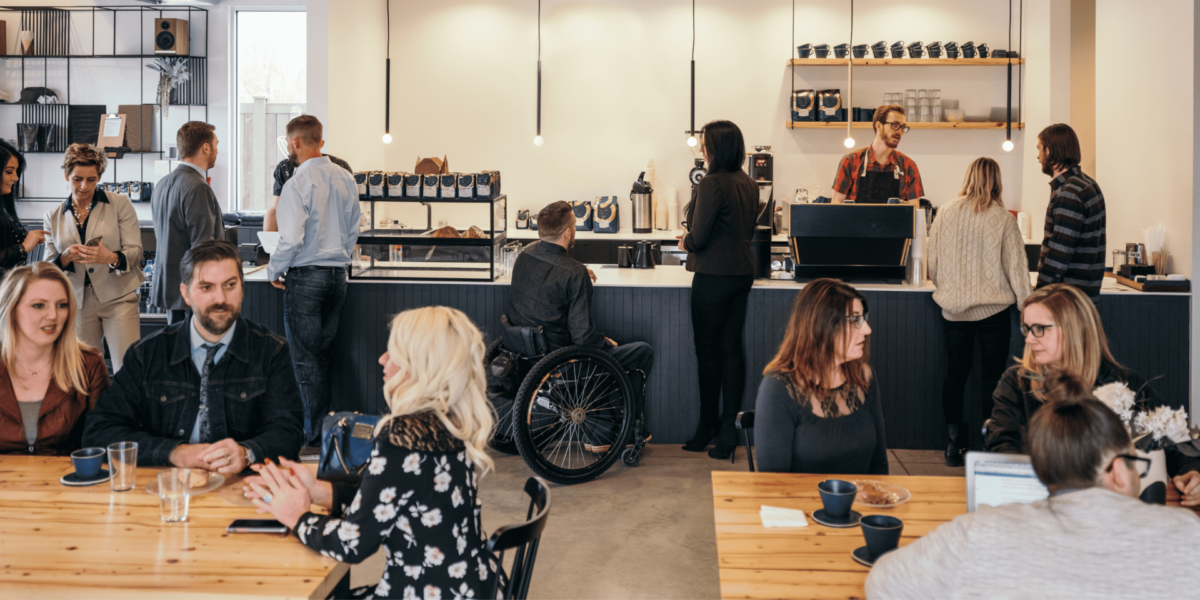
Stillness in Cafés Begins with Design Intent
Creating quiet zones in coffee spaces starts with a clear design strategy. In busy cafés, stillness doesn’t happen by accident. Designers must plan for it. A well-placed corner, an acoustically soft material, or a shift in lighting can signal to a customer that this is a space for rest. The goal is not to eliminate activity, but to give it structure. When the design supports both energy and pause, customers can choose how they want to experience the space.
Spatial Layout Supports Quiet Zones
The arrangement of furniture and fixtures defines where people can pause. Every café has high-traffic areas: the entrance, the counter, and the pickup zone. These spaces carry energy and movement. To craft stillness, seating must live outside these paths. Designers often place single chairs, wall benches, or window nooks away from the main flow. Physical separation allows noise and motion to fade, creating areas that invite reflection, reading, or focused work.
Realistic Scenario: A Guest Seeks Stillness in a Crowded Café
A customer enters a loud, busy café and notices a quiet space near the back. The tables near the entrance are full and close together. But in the far corner, one chair sits beneath a soft light, bordered by bookshelves. The floor feels slightly quieter. The customer takes a seat, turns off their phone, and opens a notebook. They stay longer than planned—not because the café is empty, but because this part of it feels calm. That moment of stillness exists because the space makes it possible.
Acoustic Planning Reduces Distraction
Sound-absorbing materials help define quiet areas in open cafés. Fabric chairs, rugs, acoustic panels, and soft wall finishes reduce echo and carry less sound. When used strategically—especially in corners or long-stay zones—these materials create barriers between high and low energy areas. They make conversations feel private and help quiet customers feel welcome. Design choices that manage sound give stillness a physical presence in the café.
Lighting Levels Guide Emotional Response
Dimmed lighting invites quiet focus and slows physical movement. People respond to light with behavior. Bright lights speed up motion, support fast decision-making, and keep energy high. Lower lighting, especially in warm tones, promotes stillness and quiet thinking. In busy coffee shops, placing low lighting over select tables or corners signals that those spaces are meant for pause, not quick turnover.
Furniture Type Influences How Long Guests Stay
Soft, individual seating supports quiet use without requiring signage. Designers can cue behavior through furniture alone. Group tables near the center of the café often fill with lively guests. But a solo armchair in a corner, or a small table with a built-in divider, offers a different message. It tells the customer: you can stay here, and you don’t have to engage. These seating cues help establish stillness as part of the café’s offering.
Material Choices Communicate Tone
Natural, tactile materials promote slower, more mindful interaction. Materials such as wood, linen, and stone introduce warmth and texture that soften the pace of the room. In contrast, polished metal and plastic often reflect sound and light, increasing sharpness and speed. Where stillness is the goal, materials should absorb rather than bounce. This not only helps with acoustics but shapes how guests feel about their surroundings.
Visual Boundaries Create Privacy in Open Rooms
Low partitions and vertical elements give customers a sense of space. A café doesn’t need walls to create quiet zones. Bookcases, plants, low dividers, and hanging panels can separate seating without closing it off. These subtle design tools give guests visual privacy, reducing the pressure to interact or hurry. Stillness becomes easier when people feel like they are not being watched or overheard.
Soundscapes Should Match Spatial Function
Music volume and tone need to align with each seating zone’s purpose. Upbeat playlists near the counter help move customers through the ordering process. But in quiet zones, music should drop in volume and slow in tempo. Some areas may benefit from no music at all, relying instead on natural sound or minimal ambient noise. When sound is intentionally varied, it helps define how each space should feel and function.
Stillness Adds Value to the Café Experience
Designing for quiet moments supports emotional well-being and loyalty. In a fast-moving world, guests remember places that allow them to breathe. Stillness in a café isn’t just a design feature—it’s a service. People who find a space that supports reflection or concentration are more likely to return. The ability to shift gears from fast to slow inside a single café creates balance and builds brand trust.
Stillness Must Be Designed Into the Café
Quiet moments require structure, space, and sensory alignment. Cafés don’t need to choose between energy and calm. With careful planning, both can exist side by side. Through layout, lighting, materials, and sound control, designers can create quiet zones where guests rest, focus, and recharge. These moments of stillness give the café depth and meaning—transforming it from a busy coffee stop into a place of intentional pause.