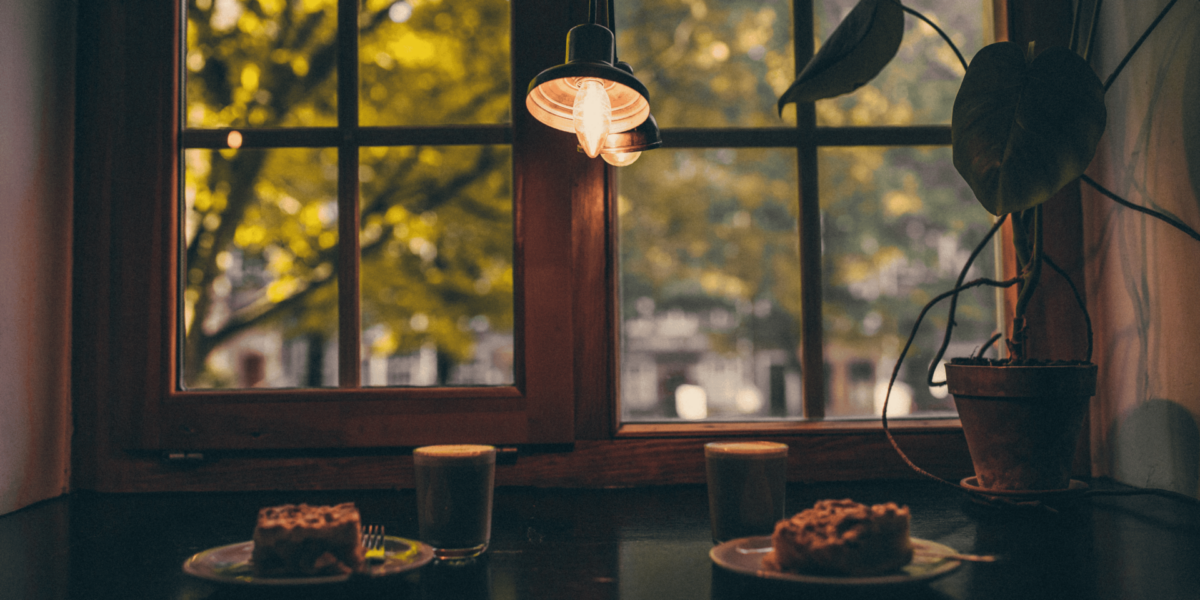
Morning Begins with a Breath of Coffee and Cloud
As the day starts, the window fogs with condensation from brewing pots and early rain. Passersby glance in as they rush past, pulled by the glow of overhead bulbs and the warmth trapped inside. The scent of fresh roast mixes with the damp air, creating a signal that the café has opened for the day.
Glass Reflects the First Faces of the Day
The glass pane mirrors morning routines. Regulars approach with practiced steps, and their reflections blend with steam swirling inside. Some pause to check the sky or adjust their scarf. From inside, the staff observes without interrupting, already preparing the space for a steady stream of visitors.
Raindrops Sketch Movement on the Surface
As the morning unfolds, rain picks up. Drops streak across the window, forming slow trails that catch passing light. These streaks distort the view outside, softening street edges. People walking by appear blurred, their forms shifting like moving paintings. The weather outside creates a quiet contrast to the clatter of cups within.
Light Changes the Shape of the Space
By midday, the sky begins to lift. Sunlight breaks through, changing the reflection on the glass. Shadows from tables and chairs stretch across the tiled floor. This light invites longer stays. Guests linger by the window, drawn to the shifting warmth as they sip and speak in low tones.
The Window Frames Every Conversation
At every hour, the window becomes the backdrop to conversation. Friends reunite, workers pause, and strangers sit near one another in silence. The glass does not isolate—it connects the inside to the street. People on both sides feel the presence of the other, even without direct interaction.
Steam Returns with the Afternoon Rush
As the afternoon crowd arrives, espresso machines hum and release bursts of steam. The window fogs again in spots, especially near the counter. Someone leans back in a chair and taps the pane with a knuckle while waiting. These patterns—marks, smudges, and silhouettes—become part of the window’s daily story.
Exterior Noise Blends with Interior Stillness
Traffic grows outside, horns and footsteps overlapping. Inside, the café remains calm. This tension between city pace and café stillness plays out against the window. A siren passes in the distance while a cup lands softly on a saucer. The window catches both rhythms without letting one overpower the other.
Reflections Reveal the Day’s End
As evening nears, the glass darkens. It reflects more than it shows. Inside lights bounce off the pane, casting layered images—baristas moving, hands lifting mugs, shelves lined with pastry. Outside, figures become shadows. Rain returns, softer this time, dotting the window with quiet reminders that the day is closing.
The View Holds What the City Leaves Behind
The window holds evidence of every moment. Fingerprints. Water spots. A smear of foam from someone leaning too close. These marks stay until the night crew wipes them clean. What remains isn’t visible—it’s the rhythm of traffic, the voices that once filled the air, and the scent of roast still lingering as the door locks.
Each Pane Captures a Living Portrait of the City
Throughout the day, the café window is more than glass. It’s a witness. It shows how rain changes the street and how light changes the mood. It captures how a city slows just long enough to warm up inside before stepping back into the world. Through scent, sound, and shadow, each day paints a new reflection on its surface.